


Gaming for Longevity
Laurier researchers design virtual reality games to keep seniors active
Laurier researchers design virtual reality games to keep seniors active
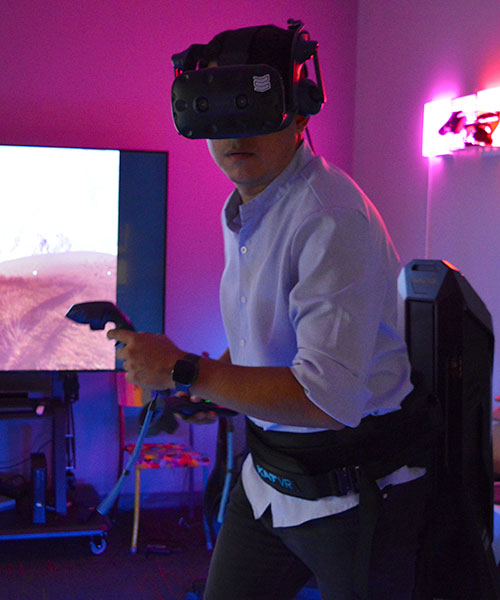
Lab director John Muñoz testing VR technology in
Laurier's BioAdaptive Interface Lab
February 19, 2026
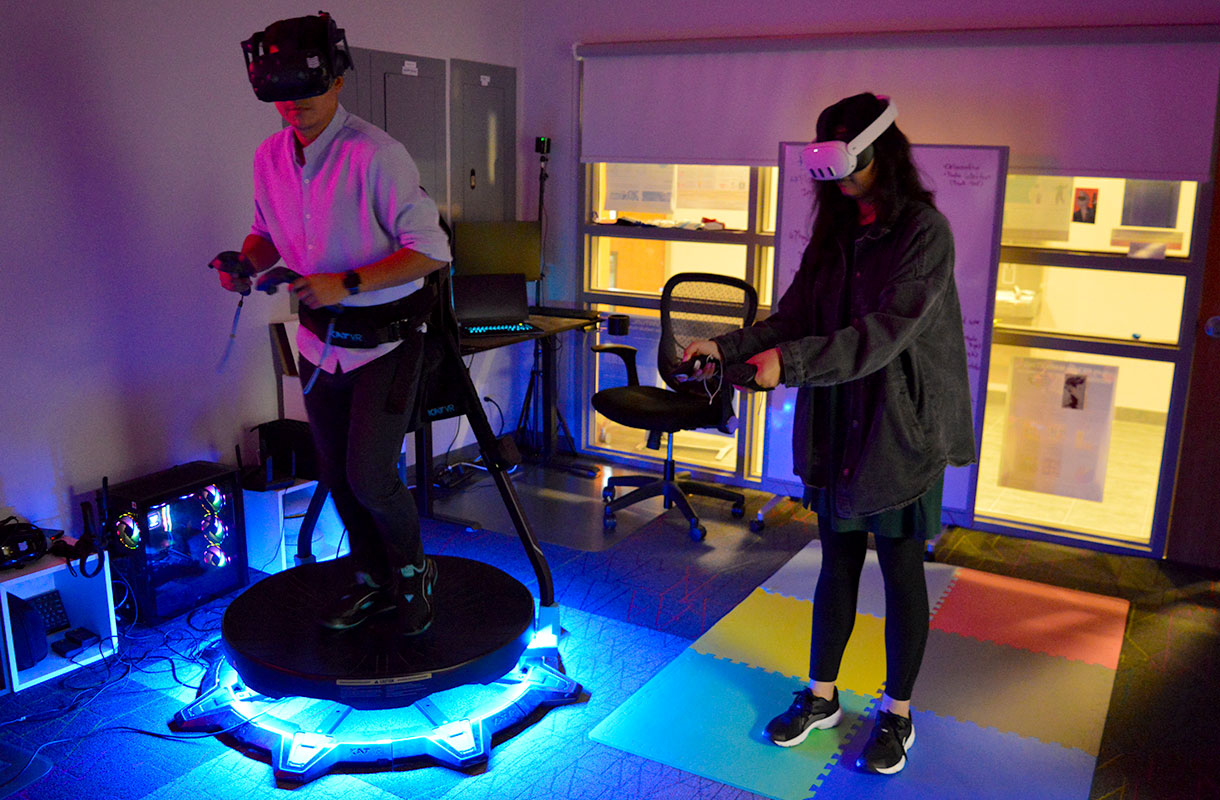
If you peer through the windows of the BioAdaptive Interface Lab at Wilfrid Laurier University’s Brantford campus, you might think you’ve stumbled upon a high-tech student lounge. Coloured lights illuminate Wii gaming consoles, virtual reality (VR) headsets and an omnidirectional treadmill. Hours of videogaming happens in this room, but it’s not just for fun. Lab director John E. Muñoz and his students are designing interactive technologies to improve health and well-being.
Muñoz, an assistant professor of User Experience Design, oversees a wide range of research activity in the BioAdaptive Interface Lab, ranging from crisis response training for police officers to self-regulation games for children. By incorporating adaptive biofeedback systems into his games, he is creating responsive, user-specific digital experiences. Built-in sensors respond to physiological data, such as heart rate, muscle activity and brain signals, adapting the content to individual users as they play.
Muñoz’s work is deeply technical, but he describes it as “community driven.” He is focused on human-centred design.
“I build technology for people, so I include people in the design process,” says Muñoz. “My background is in physics engineering, where we study instruments and how to use them. We don’t typically work with human participants. But in User Experience Design, rather than deciding what will be good for users, we actually ask people and co-design solutions that they find beneficial.”
One of Muñoz’s longtime passions is designing “exergames:” videogames that empower people to stay active while having fun. As a child, he remembers his grandmother recovering from a stroke and noting that her rehabilitation exercises were monotonous. She struggled to stay engaged and committed to her recovery.
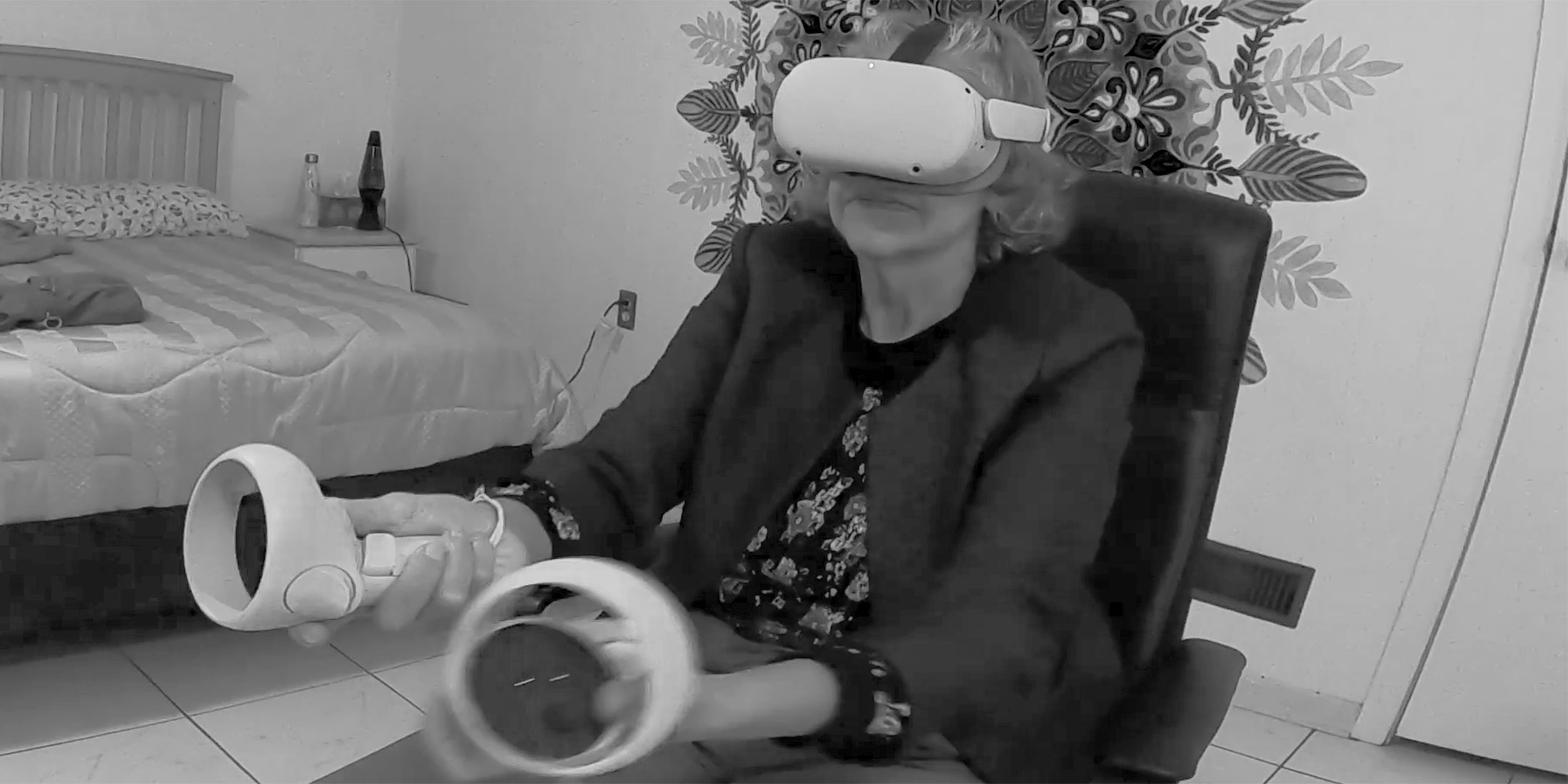
Inspired by his grandma, Muñoz’s “Active Aging Through Play” project uses VR headsets to transport players to scenic locations, enabling people with physical challenges or dementia to row a boat, fish or do tai chi from the comfort of their chair. Exergames offer caregivers and physiotherapists a new tool for working toward therapeutic outcomes.
Testing and learning are essential pieces of the exergames design process and Muñoz sought local collaborators when he joined Laurier in 2024. Since he was new to Brantford, the Laurier Hub for Community Solutions connected him with potential partners.
“I reached out to organizations and invited therapists and managers to come visit my lab,” says Muñoz. “I had them play our games and we discussed how a program using these technologies could look in their facilities.”
Muñoz found common goals with the Adult Recreation Therapy Centre (ARTC), a community support agency in Brantford that provides day programming for adults with cognitive and physical impairments. With funding from the Alzheimer Society of Brant, Haldimand Norfolk, Hamilton Halton, Muñoz is studying how to support physical activity, cognitive engagement and well-being for older adults living with dementia.
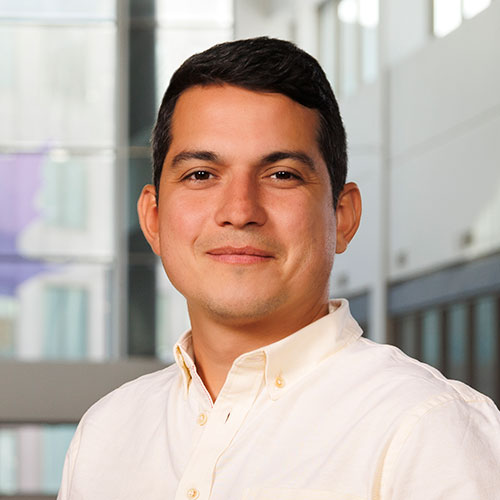
“All of the technologies we’re working on have uses outside of the lab, and I want them to be adopted by the people who really need them.”
John Muñoz, assistant professor, User Experience Design
To find participants for the study, Muñoz and his students have been dropping by ARTC and inviting volunteers to trial a guided VR experience called "Seas the Day.” On a recent visit, Muñoz began by asking attendees what they miss doing at this stage of life.
“Driving my car,” said someone.
“Running,” said another.
Muñoz explained that VR offers the potential to experience – or re-experience – almost anything we can imagine. The scenes in Seas the Day include lakeside docks and peaceful campfires – places past research participants said they wanted to revisit.
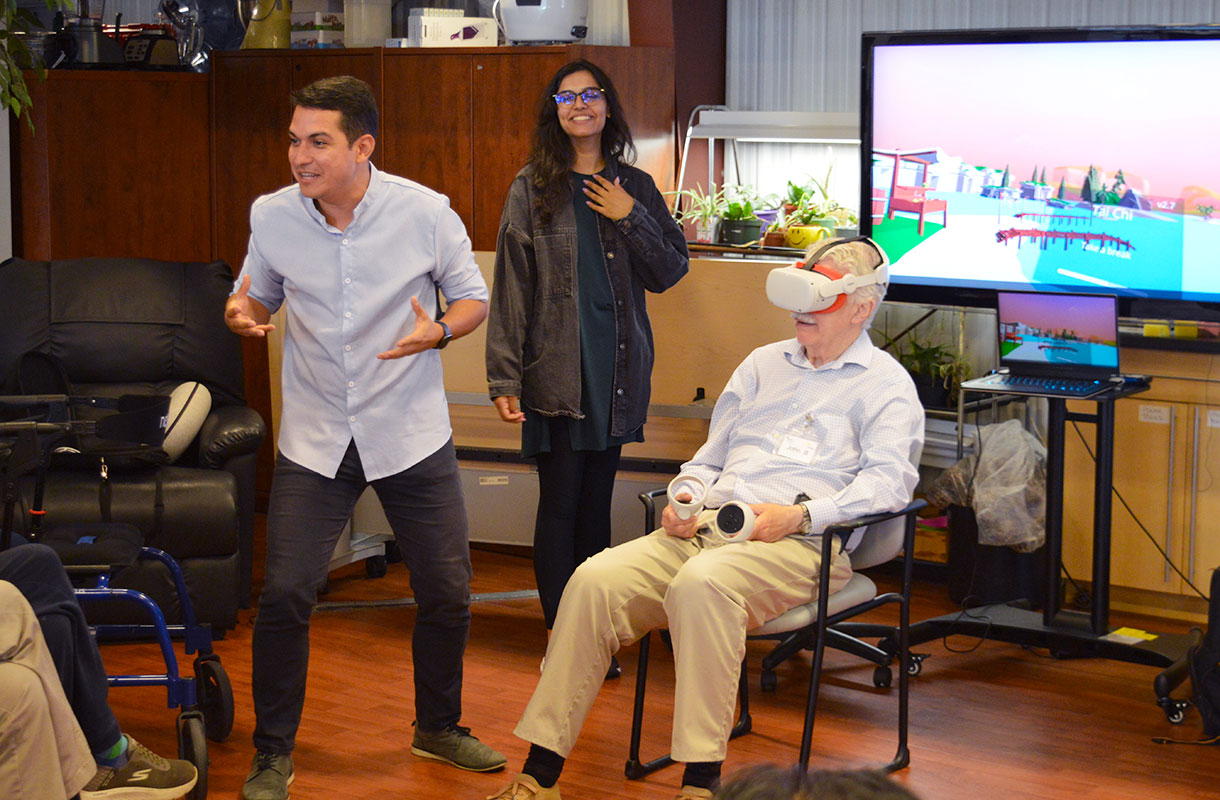
A man named John volunteered to test out the game. Muñoz set him up with a VR headset and wireless controllers in each hand. Audience members could watch John’s gameplay in real-time on a big-screen TV behind him.
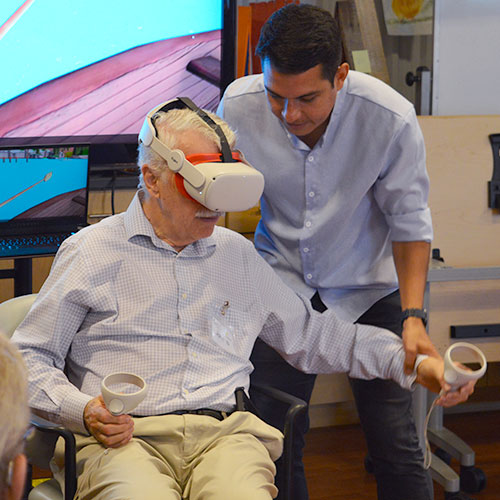
John’s first task was to follow a floating leaf with his controllers. Muñoz co-designed these simple motions with exercise professionals and health scientists, ensuring a variety of meaningful movements that will tire, but not wear out, participants. Just like a physiotherapy session, the movements become steadily more intense. John transitioned into rowing a canoe, noting the birds flying overhead as he cruised down the lake.
Next, Muñoz showed John how to cast a fishing line. When he felt the controllers vibrate, it was time to reel in his catch.
“What kind of fish is that, John?” asked Muñoz
“Could be a trout,” John replied.
Muñoz explained that the casting movements are based on exercises he learned working with stroke survivors and clinicians in his home country of Colombia.
John wrapped up his fishing trip and took off the headset. Muñoz asked for his feedback. John said that he was an experienced rower and the game movements didn’t match his expectations for turning and steering.
“Gameplay isn’t meant to match the physics of real motion, but this is valuable feedback,” said Muñoz. “If that is a common concern, then maybe we need to develop an app that mimics real rowing.”
John was visibly proud to have caught four fish and said he would try to catch more next time. Muñoz smiled and shared that the game is designed to foster a sense of internal competition. Players want to keep “beating” their past performances, inspiring them to do more exercise.
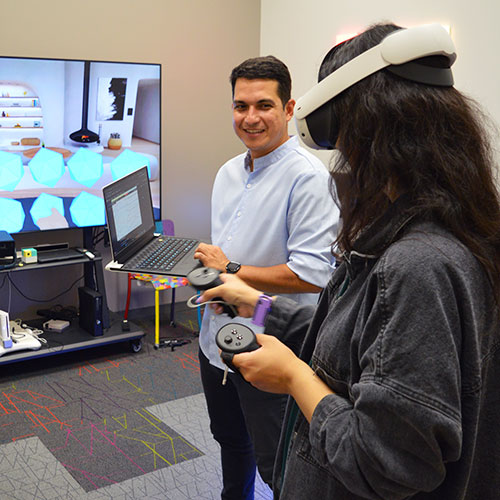
“Everybody is using VR and games to conduct our studies. John is a hands-on supervisor, giving us the opportunity to explore."
Muntaha Chaudry, Biology student
"Seas the Day" was created by an interdisciplinary team of researchers, along with Reality Well, Schlegel Villages and The Schlegel-UW Research Institute for Aging. With the input of participants like John, Muñoz is excited for its potential. He is working on similar games for stroke survivors and people living with Parkinson’s disease.
The hope is to make each immersive experience available in digital stores so anyone with a VR headset can play at home. Acknowledging generational discomfort with technology, Muñoz is even developing a social robot named RACHEL (Robotic Assistant for Community Helped Engagement and Learning) to provide exergame coaching and encouragement.
At the other end of the age spectrum, Muñoz is partnering with psychiatrists at SickKids in Toronto to integrate VR into pediatric medicine. “Games are an easy sell for children,” he says, and they are exploring a variety of possible applications.
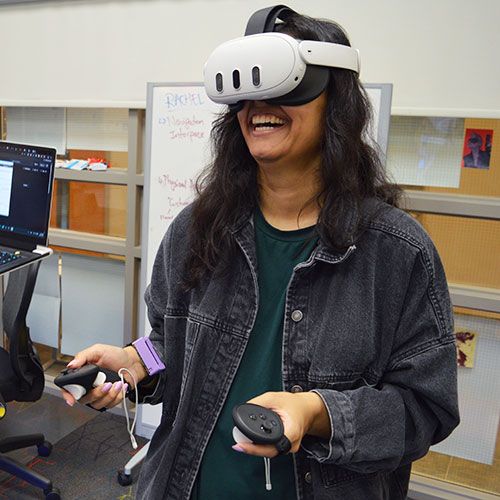
“We are working with children with ADHD to determine how their head and hand movements could be used to distinguish neurotypical children from those with neurodevelopmental issues,” says Muñoz. “We also hope to co-design biofeedback games to train kids to self-regulate. Imagine you’re playing a character in a game and the better you breathe in real life, the more power your character earns. You will progress levels based on your self-regulation.”
Laurier students are critical contributors to Muñoz’s research, and many team members in the BioAdaptive Interface Lab are working on exciting projects of their own.
“We come from all different programs – health studies, user experience design, psychology – and we’re all doing our own thing, but everybody is using VR and games to conduct our studies,” says Muntaha Chaudry, a fourth-year Biology student. “We help each other out. If I don’t know how to create a game for my research study, someone from computer science or game design will collaborate with me and make it happen. And then John is a hands-on supervisor, giving us the opportunity to explore.”
Above all, Muñoz hopes to instill in his students the importance of human-centred design and how to work with users.
“I don’t find it rewarding to develop things just for the sake of publications and grant funding,” he says. “All of the technologies we’re working on have uses outside of the lab, and I want them to be adopted by the people who really need them.”